

| Category | Bronchoscopy |
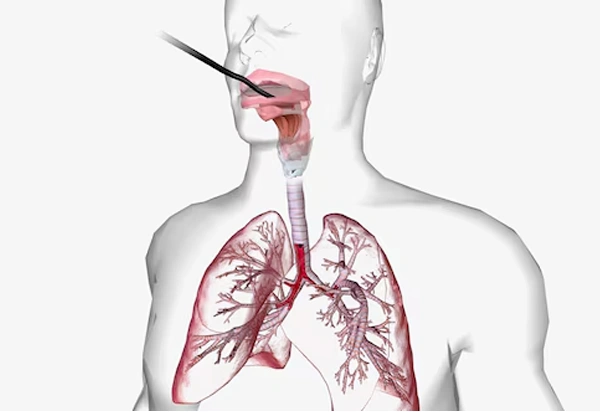
Bronchoscopy is an advanced diagnostic and therapeutic procedure used to examine the airways and lungs. It helps pulmonologists identify infections, tumors, inflammation, blockages, and other respiratory conditions that may not be fully visible through X-rays or CT scans. During the procedure, a thin flexible tube equipped with a camera, known as a bronchoscope, is inserted through the nose or mouth to visualize the air passages and lungs.
If you are looking for Bronchoscopy in Indirapuram, Dr. Ankit Bhatia provides expert evaluation and advanced bronchoscopic procedures with a focus on patient safety, accurate diagnosis, and personalized treatment.
Bronchoscopy is a minimally invasive procedure that allows doctors to directly inspect the respiratory tract, including the trachea and bronchi. It can be performed using a flexible bronchoscope, which is commonly used for diagnosis and minor procedures, or a rigid bronchoscope for more complex interventions.
The procedure helps in:
Bronchoscopy plays an important role in diagnosing lung conditions accurately and planning the most effective treatment.
Your pulmonologist may recommend bronchoscopy if you have:
A chronic cough that does not improve with medications may require bronchoscopic evaluation to determine the underlying cause.
Bronchoscopy helps identify the source of bleeding within the respiratory tract and assists in treatment planning.
Patients suffering from repeated lung infections may undergo bronchoscopy to detect blockages, infections, or structural abnormalities.
If imaging reveals suspicious lesions, nodules, or abnormalities, bronchoscopy helps obtain a definitive diagnosis.
Bronchoscopy allows direct visualization and biopsy of suspicious lesions, helping in the early diagnosis and staging of lung cancer.
It can also be used to locate and remove foreign objects or mucus plugs obstructing the airways.
Bronchoscopy offers numerous advantages over traditional surgical diagnostic methods.
The procedure does not require large incisions, resulting in faster recovery and minimal discomfort.
Direct visualization of the airways helps doctors diagnose lung diseases with greater precision.
Small tissue or fluid samples can be collected for laboratory analysis and biopsy.
Bronchoscopy helps detect serious conditions such as lung cancer and chronic infections at an early stage.
Apart from diagnosis, bronchoscopy can remove foreign bodies, clear mucus plugs, control bleeding, and place airway stents when necessary.
Most patients return home the same day and resume normal activities within a short period.
The bronchoscopy procedure is usually performed in a hospital or specialized pulmonary center under sedation.
Patients are advised not to eat or drink for several hours before the procedure. Certain medications, especially blood thinners, may need temporary adjustment.
A sedative is administered through an intravenous line to help the patient relax. Local anesthesia is sprayed in the nose and throat to reduce discomfort.
A thin bronchoscope is gently inserted through the nose or mouth and advanced into the trachea and bronchi.
The doctor examines the airways using a camera attached to the bronchoscope. Images are displayed on a monitor for detailed assessment.
If required, tissue samples are collected or therapeutic procedures are performed during the same session.
The bronchoscope is removed, and the patient is monitored for a short period before discharge. The actual bronchoscopy usually takes around 30 to 60 minutes, although total preparation and recovery time may be longer.
Bronchoscopy is used to diagnose and evaluate a wide range of respiratory conditions, including:
It is one of the most effective procedures for diagnosing unexplained respiratory symptoms and abnormal lung imaging findings.
Bronchoscopy is considered a safe procedure when performed by an experienced pulmonologist. Most patients experience only mild side effects such as:
Rare complications may include:
Your doctor will carefully assess your medical condition and explain all potential risks before the procedure.
After bronchoscopy:
Most patients recover quickly and can return to routine activities within 24 hours.
Dr Ankit Bhatia is a trusted pulmonologist known for providing comprehensive respiratory care and advanced bronchoscopy procedures.
Extensive expertise in diagnosing and managing complex lung diseases.
State-of-the-art bronchoscopy equipment for precise diagnosis and treatment.
Individualized treatment plans based on each patient's symptoms and medical history.
Complete care for asthma, COPD, infections, lung fibrosis, sleep disorders, and airway diseases.
Focus on patient comfort with strict safety protocols and modern techniques.
Bronchoscopy is an essential procedure for diagnosing and treating various lung and airway disorders. It provides detailed visualization of the respiratory tract, enables accurate diagnosis, and allows several therapeutic interventions without major surgery. If you are experiencing persistent cough, breathing difficulties, recurrent chest infections, or abnormal lung imaging, timely bronchoscopic evaluation can make a significant difference in your treatment outcome.
For expert Bronchoscopy in Indirapuram, consult Dr Ankit Bhatia for advanced pulmonary care and personalized treatment.
No. Bronchoscopy is usually performed under sedation and local anesthesia, so most patients experience minimal discomfort.
The bronchoscopy procedure generally takes around 30–60 minutes, while total preparation and recovery may take a few hours.
Yes. Bronchoscopy can visualize suspicious lesions and obtain tissue samples for biopsy, helping diagnose lung cancer.
Yes. It is a safe and minimally invasive procedure when performed by an experienced pulmonologist, with complications being uncommon.
Most patients resume normal daily activities within 24 hours after the procedure, depending on their recovery and doctor's advice.